
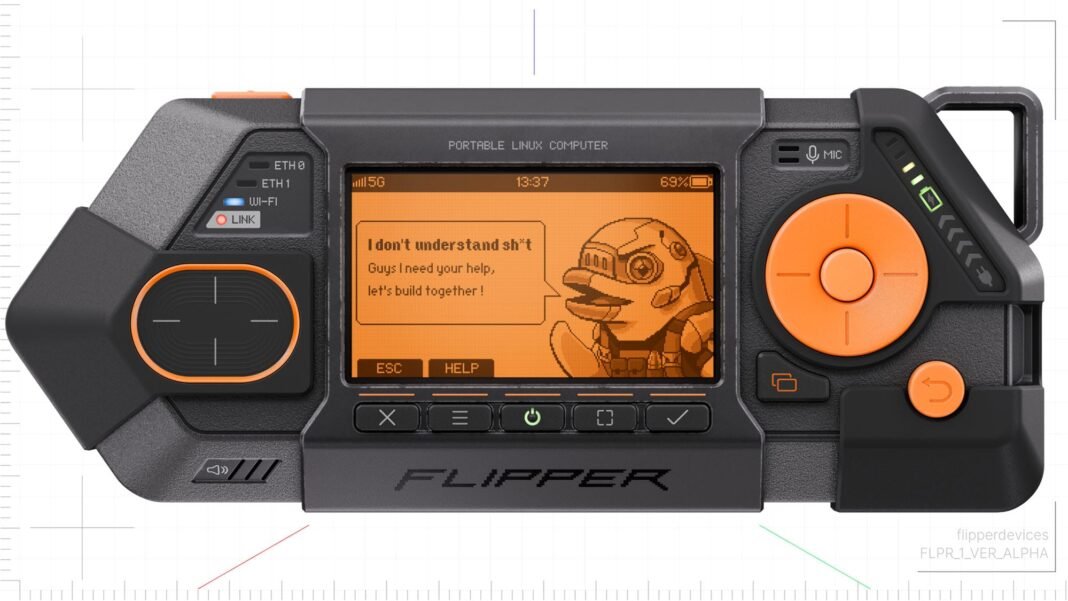

Another hardware Kickstarter is tearing through funding records. The Flipper One, a pocket-sized Linux computer from the makers of the Flipper Zero, has raised roughly $16 million (and climbing) within days of launch, blowing past its modest $300,000 goal. Tens of thousands of backers have piled in. Delivery is penciled in for July 2027.
The numbers look impressive. The reality, as always with big crowdfunding launches, is more complicated.
Not a Zero Sequel
Flipper Devices is clear on one point: the Flipper One is not a direct successor to the Flipper Zero. The Zero, launched in 2020, is a compact multi-tool focused on low-level protocols—RFID, NFC, Bluetooth, sub-GHz radio. It became a favourite among tinkerers and a frequent subject of security scare stories. It remains on sale.
The One is a different project. It runs a full Linux system on a Rockchip RK3576 processor (with a Raspberry Pi RP2350 co-processor handling the display and controls). It targets networking and higher-level computing rather than raw radio signals. Built-in Wi-Fi 6E, dual Gigabit Ethernet ports, HDMI, and expansion options for 5G, LoRa, and software-defined radio put it closer to a portable cyberdeck or travel router than a key-fob cloner.
You can use it as a Wi-Fi client or hotspot, set up a VPN, monitor network traffic, analyze smart-home devices, run it as a media box, or even treat it as a basic desktop computer with peripherals attached. Add-ons open further possibilities—radio scanning, off-grid messaging, and more once the community gets its hands on the hardware. The base Kickstarter price sits at $399 (said to cover production costs with no margin, thanks to the ongoing memory shortage). Bundles with modules push the total higher, towards $750 or more.
The Crowdfunding Reality Check
Rewards-based campaigns like this one are not equity investments. Backers are pre-ordering a product, not buying shares. That distinction matters. Kickstarter and similar platforms have delivered many successful gadgets, but they have also produced well-documented delays, shortfalls, and failures. Component shortages, especially memory, are already being cited by the team as a risk. Shipping estimates of mid-2027 leave more than half a year for those pressures to intensify.
The company has been relatively open about pricing and margins. That is better than the glossy-render-and-vague-timeline approach that has burned backers in the past. Still, early hardware campaigns frequently slip. The Flipper Zero itself had its own production and fulfilment hurdles after a successful raise. History suggests caution is warranted even when the founding team has a track record.
Security Angle, Again
The Zero generated years of headlines about car-key relay attacks and access-control testing. Many of those capabilities were exaggerated relative to real-world protected systems, but the device did put low-level tools in more hands.
The One shifts the conversation. It is essentially a portable Linux machine that can probe networks, act as a honeypot, or test Wi-Fi and server configurations. In skilled hands that is useful for defensive work and research. In other hands it is another networked computer that can be misused. It does not magically create new vulnerabilities that a laptop or Raspberry Pi could not already exploit. The difference is form factor and branding. Expect the same cycle of media alarm and measured technical pushback that accompanied the Zero.
What Backers Should Watch
Large early pledges create momentum and social proof. They do not guarantee on-time delivery, final specifications that match the pitch, or long-term support. The campaign is still live at the time of writing. Backers should treat the $399 price and July 2027 window as estimates, not contracts. Component costs, regulatory hurdles for cellular modules, and software maturity remain open variables.
Crowdfunding works best when supporters understand the risk they are taking. The Flipper One is an interesting piece of hardware aimed at a clear audience of network-minded tinkerers. Whether the project converts record pledges into shipped, functional devices on anything close to the promised timeline is the question that matters. That answer will not arrive for many months.
For now, the money is in. The product is still on the drawing board.